Healthy jawbone does more than hold teeth in place — it preserves facial shape, enables comfortable chewing, and forms the foundation for predictable dental restorations. When a tooth is lost or when periodontal disease weakens the bone around a tooth, the underlying support can recede. Over time this change can make teeth look longer, reduce the fullness of the cheeks, and compromise nearby teeth and restorations.
Bone loss is a gradual process that can begin soon after a tooth is removed or after chronic infection sets in. Because the jaw responds to the presence of teeth and the forces of biting, missing teeth remove that natural stimulation and the local bone may shrink. Addressing bone loss early helps patients avoid more extensive treatment later and preserves options for tooth replacement.
Understanding the importance of preserving bone helps patients make informed choices about extractions, periodontal care, and implant planning. A proactive approach preserves facial form and function, and it lays the groundwork for reliable, long-lasting results from restorations such as dental implants and fixed bridges.
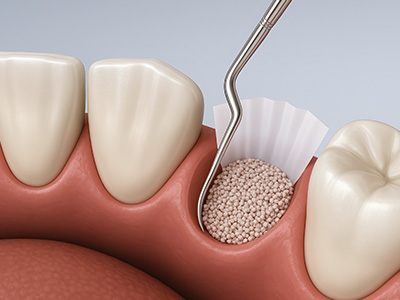
At its core, a bone graft recreates the missing structure needed to support teeth, implants, and soft tissues. Graft material acts as a scaffold that invites the body’s own bone-forming cells to grow into the area, gradually replacing the graft with living bone. The goal is to restore both volume and shape so that the mouth can be healthy and functional again.
There are several kinds of graft materials commonly used: tissue taken from the patient, carefully screened donor bone, and synthetic bone-like substances designed to encourage natural healing. The choice depends on the clinical goal, the size of the defect, and the patient’s overall health. Your dental team will recommend the most appropriate material to balance effectiveness with comfort and healing time.
In many cases a graft is combined with specialized barrier membranes or biologically active agents that help protect the site and guide new bone formation. These adjuncts reduce the risk of soft tissue growing into the defect and help create a stable environment for predictable regeneration.
Bone grafts can be placed at different points in treatment depending on the situation. An immediate graft is placed at the same appointment as a tooth extraction to preserve the existing ridge and minimize future loss of bone volume. This preventive approach makes later implant placement simpler and often preserves more of the jaw’s natural contours.
In other cases, grafting is performed after the area has healed from an extraction or after periodontal disease has been treated. Delayed grafting requires reopening the site to place material and then allowing several months for the graft to integrate. Although delayed grafts may prolong treatment, they are often necessary when infection or extensive bone loss must be addressed first.
For complex reconstructions, a staged plan is common: rebuild the bone, allow time for maturation, and then place implants or proceed with restorative work. Your dentist will review the timeline with you, explain how each stage contributes to predictable outcomes, and discuss sedation or comfort options to make the process as smooth as possible.
When missing bone prevents implant placement in the upper back jaw, a sinus lift (sinus augmentation) is often the solution. During this procedure the sinus membrane is gently elevated and graft material is placed beneath it to create the vertical height needed for a stable implant. It’s a common and well-established technique when the natural bone is thin beneath the sinus cavity.
Ridge augmentation focuses on restoring the contour and width of the jaw where bone has collapsed following tooth loss or disease. This can be important not only for function but for achieving a natural-looking smile with fixed restorations. Augmentation may be performed for functional reasons, cosmetic reasons, or to prepare the site for an implant or bridge.
Both procedures rely on careful surgical technique and modern imaging to plan placement precisely. Advanced tools such as cone-beam computed tomography (CBCT) allow clinicians to visualize the bony anatomy and plan grafts with a high degree of accuracy, improving safety and predictability.
Before any grafting procedure your team will perform a thorough assessment that may include clinical exams, X-rays, and CBCT imaging to map the anatomy and select the best treatment path. Medical history and current medications are reviewed to reduce risks, and your clinician will discuss sedation and anesthesia options so you know what to expect during the appointment.
During the procedure you can expect the surgeon to place graft material precisely into the prepared site and protect it with a membrane or other protective layer when indicated. Many grafts can be completed with minimal invasiveness; for patients who prefer it, IV sedation and comfort-focused techniques are commonly available to make the experience more relaxed.
Recovery varies by procedure and individual healing capacity, but most patients experience manageable discomfort that is controlled with simple measures and short-term medications. Care instructions typically include gentle oral hygiene, temporary dietary adjustments, and follow-up visits to monitor healing. Over the ensuing months the graft integrates and transforms into living bone, at which point implant placement or restorative work can proceed when appropriate.
Bone grafting is a proven way to restore the foundation of the mouth — rebuilding lost volume, improving appearance, and creating the conditions needed for reliable tooth replacement. Whether preserving a socket at the time of extraction, lifting the sinus floor, or augmenting a ridge for cosmetic or functional reasons, grafting expands the options available to patients who want stable, long-lasting results.
If you’re considering tooth replacement or have concerns about bone loss, speak with your dental team to learn how a graft might fit into your personalized treatment plan. Our team in Edmond can explain the options, imaging, and comfort measures available so you can make an informed choice. Contact us to learn more and schedule a consultation to discuss whether bone grafting is right for you.


A bone graft is a surgical procedure that rebuilds missing jawbone by placing material that acts as a scaffold for new bone growth. The grafted material encourages the body’s own bone-forming cells to populate the site and gradually replace the scaffold with living bone. Over time this process restores volume and shape so the jaw can support teeth, implants, and surrounding soft tissues.
Restoring lost bone preserves facial contours, improves chewing function, and broadens options for predictable restorative care. Early grafting after extractions or to treat periodontal bone loss helps prevent progressive shrinkage that can compromise adjacent teeth and prosthetic outcomes. With modern techniques, bone grafting is a foundational step in many long-term treatment plans for oral health and function.
Dental implants require a certain amount of healthy jawbone for stable placement and long-term success. When a tooth is missing for a long time or when periodontal disease has eroded the bone, there may not be enough width or height to secure an implant safely. A graft rebuilds the deficient area so the implant can be placed with proper depth, alignment, and support.
Grafting before implant placement also helps achieve better esthetic outcomes by restoring natural contours of the ridge and supporting the gums around the implant crown. In some cases grafting is done at the same time as the implant, while other situations benefit from staged grafting to ensure optimal bone quality before implant surgery.
Clinicians commonly use several categories of graft materials: autografts (bone harvested from the patient), allografts (donor bone that has been screened and processed), xenografts (processed animal-derived material), and alloplasts (synthetic bone-like materials). Each option has advantages related to handling, availability, and the rate at which it is replaced by the patient’s own bone. Your dental team will select the material that best balances predictability, healing, and your specific clinical needs.
In many cases grafts are paired with barrier membranes or biologic agents that protect the site and guide bone regeneration by excluding soft tissue ingrowth. These adjuncts can enhance outcomes by creating a stable environment for bone cells to repopulate the area and remodel the graft into living bone over time.
A sinus lift, or sinus augmentation, is a procedure used to increase vertical bone height in the upper back jaw when the natural bone beneath the sinus is insufficient for implant placement. The sinus membrane is gently elevated and graft material is placed in the newly created space to build the bone needed for stable implants. This technique is particularly common when teeth have been missing for a long time or when the sinus anatomy limits available bone.
Sinus lifts are planned using three-dimensional imaging to assess membrane anatomy and bone dimensions, which improves safety and predictability. With careful technique the procedure is well established and allows many patients who otherwise could not receive implants in the posterior maxilla to proceed with restorative treatment.
Ridge augmentation restores the width and contour of the jaw where bone has shrunk after tooth loss, trauma, or disease. Loss of ridge volume can cause functional problems with chewing and speech and can make it difficult to achieve natural-looking implant restorations or fixed bridges. Augmentation rebuilds the ridge so prosthetic teeth can be supported in the ideal position for both function and esthetics.
Augmentation techniques vary with the size and location of the defect and may include particulate grafts, block grafts, or guided bone regeneration with membranes. The goal is to reestablish a stable foundation for implants and to create a harmonious gumline and facial profile that supports a natural result.
Bone grafts can be placed immediately at the time of tooth extraction to preserve the socket and reduce future bone loss, which often simplifies later implant placement. In other cases grafting is delayed until after infection resolves or soft tissues have healed; delayed placement may require reopening the site and waiting several months for integration. Complex reconstructions commonly use a staged approach: rebuild the bone, allow it to mature, and then proceed with implants or definitive restorations.
Your clinician will recommend the timing that best addresses infection control, tissue health, and the overall treatment plan. Factors that influence timing include the presence of active periodontal disease, sinus health, the amount of existing bone, and the desired final prosthetic outcome.
Soft-tissue healing usually occurs within a few weeks, while true biological integration of a graft into living bone takes longer—often several months. In many cases clinicians wait three to six months before placing implants so the graft material has time to remodel and achieve sufficient density for stable fixation. Larger grafts or sinus augmentations may require longer healing periods and are evaluated with follow-up imaging before moving forward.
During the healing phase patients can expect gradual improvement in comfort and function, and routine follow-up appointments are scheduled to monitor progress. Healing timelines vary by individual health, the graft type, and the specific surgical technique, so your dental team will provide a personalized schedule and criteria for advancing treatment.
Bone grafting is generally predictable, but it carries potential risks like any surgical procedure, including infection, graft exposure, and incomplete integration or graft failure. When grafts are performed near the sinus, complications can include sinus membrane perforation or sinusitis; careful planning with three-dimensional imaging minimizes these risks. Less common concerns include bleeding, prolonged swelling, and temporary numbness if nerves are close to the surgical site.
Most complications are managed conservatively with local care, short-term medications, or additional minor procedures, and careful case selection helps reduce the likelihood of problems. Your clinician will review your individual risk factors, explain warning signs to watch for, and provide clear instructions to support a smooth recovery and successful outcome.
Good candidates for bone grafting are generally patients who are in overall good health, have manageable chronic conditions, and are committed to following preoperative and postoperative instructions. Smoking, uncontrolled diabetes, and certain systemic conditions can impair healing and increase the risk of graft complications, so these factors are assessed and addressed prior to surgery. A thorough medical and dental evaluation, including imaging, helps determine candidacy and tailor the treatment plan.
Patient cooperation with oral hygiene, follow-up visits, and lifestyle modifications such as smoking cessation significantly improves the chances of graft success. The dental team will discuss any medical considerations, coordinate with other healthcare providers if needed, and recommend strategies to optimize healing before proceeding.
Before the procedure you will receive a comprehensive exam that typically includes clinical assessment, X-rays or CBCT imaging, and a review of medical history and medications to reduce risks. During the appointment the graft material is placed precisely into the prepared site, and a membrane or protective layer is often used to stabilize the graft; many practices offer local anesthesia with optional IV sedation or other comfort measures. The actual surgical time varies with the complexity of the graft but is performed with attention to minimizing trauma to surrounding tissues.
After surgery expect some swelling and mild to moderate discomfort that is usually controlled with short-term medications and conservative measures such as cold therapy and a soft diet. You will be given specific home-care instructions—such as gentle oral hygiene, avoiding forceful rinsing or smoking, and attending follow-up visits—to protect the graft and track healing. If you would like to discuss grafting options or imaging available in Edmond, contact the office of Restoration Dental to schedule a consultation and personalized review of your treatment plan.
Ready to schedule your next appointment or learn more about our services?
Getting in touch with Restoration Dental is simple! Our welcoming staff is here to help you schedule appointments, answer questions about treatments, and address any concerns you may have. Whether you’d like to call or use our easy online contact form, we’re always ready to assist. Don’t wait to take the first step toward a healthier, more confident smile – contact us today and experience the difference of personalized dental care.