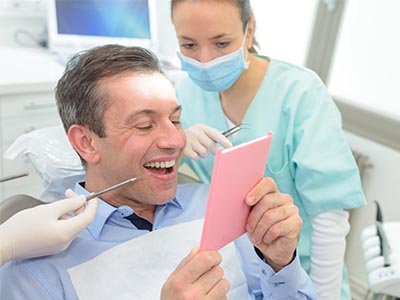
At the office of Restoration Dental, we help patients reclaim the comfort, function, and confidence that missing teeth can take away. Missing teeth are more than a cosmetic issue — they change how you eat, speak, and how your mouth ages over time. This page explains how dental bridges fit into modern tooth-replacement care: what they are, how they work, the types available, and what to expect during treatment so you can make an informed choice about restoring your smile.
When a tooth is removed or lost, the changes begin immediately and continue gradually. The neighboring teeth can shift toward the gap, altering your bite and creating points of pressure that lead to uneven wear or jaw discomfort. Over time these shifts can make chewing less efficient and contribute to soreness or joint issues in the jaw.
The bone that once supported the missing tooth also responds to the absence of stimulation. Without the normal forces of chewing, that portion of the jawbone slowly resorbs, which can change the shape of your face and make it harder to support future restorations. Preventing or minimizing bone loss is a key goal in restorative treatment planning.
Beyond the physical effects, missing teeth can affect daily routines — from avoiding favorite foods to feeling self-conscious in social settings. Replacing missing teeth restores not only chewing ability but also the natural balance of forces that keeps remaining teeth healthy and easier to clean, reducing long-term risk to your overall dental health.
Modern dentistry offers a spectrum of predictable solutions to replace missing teeth, and the right option depends on your oral health, functional needs, and aesthetic goals. Dental bridges remain a reliable choice for many people because they can restore appearance and bite without the need for a removable appliance. They are often selected when adjacent teeth are suitable to support the restoration or when implants aren’t the preferred option.
Implant-supported restorations are another widely used approach, and they can be combined with bridgework to replace multiple teeth without relying on natural teeth for support. Advances in materials, digital imaging, and laboratory techniques make both bridge and implant treatments more precise and natural-looking than ever before.
Whatever pathway you choose, the primary aim is to restore chewing efficiency, protect the health of surrounding teeth, and preserve facial contours. A careful diagnostic process ensures your treatment is planned to support long-term oral health rather than just a short-term cosmetic fix.
A dental bridge is a fixed prosthetic device designed to span the space created by one or more missing teeth. It typically consists of artificial teeth, called pontics, that are attached to support structures on either side of the gap. Those supports can be crowns placed on natural teeth or abutments attached to dental implants.
The strength of a bridge comes from its integration with the surrounding dentition or implants. When properly designed, a bridge restores normal biting and chewing function and helps distribute forces evenly across the arch. This stabilization reduces the tendency of neighboring teeth to drift and helps maintain the integrity of the bite.
Contemporary bridge materials are chosen for both durability and appearance. High-strength ceramics like zirconia and layered porcelain provide lifelike translucency while resisting wear. Technological advances in digital design and milling have further improved fit and comfort, making modern bridges both functional and aesthetic.
There are several bridge designs used in clinical practice, and the distinction usually comes down to how the restoration is supported. Traditional fixed bridges rely on crowns on teeth adjacent to the gap; these crowned teeth anchor the pontics that fill the space. This option is effective when adjacent teeth are healthy or already need crowns for other reasons.
In contrast, implant-supported bridges use dental implants as independent supports. Because implants act like artificial roots, an implant-supported bridge can replace multiple missing teeth without placing additional stress on natural teeth. This design is particularly valuable when adjacent teeth are healthy and should be preserved intact.
Other variations — such as cantilever and resin-bonded (Maryland) bridges — are used in specific situations. Cantilever bridges attach to a support on just one side and are appropriate when only one strong abutment is available. Resin-bonded bridges conserve more tooth structure but are less suitable for areas that experience high biting forces. Your dentist will recommend the option that best balances longevity, aesthetics, and the health of surrounding teeth.
Successful bridge treatment begins with a comprehensive evaluation. Your dentist will review your medical and dental history, examine the condition of adjacent teeth and gums, and take imaging to assess bone volume and tooth positions. If active gum disease or decay is present, those issues must be addressed first to create a healthy foundation for any restoration.
For a traditional bridge, the process usually involves preparing the abutment teeth for crowns, taking precise impressions (now often done digitally), and placing a temporary bridge while the laboratory fabricates the final restoration. The final appointment includes a careful check of shade, fit, and bite before cementing the permanent bridge into place.
When implants support the bridge, treatment includes surgical placement of the implants and a healing period while bone integrates with the implant surface. Temporary prosthetics can sometimes be used during healing to maintain appearance and function. Once osseointegration is complete, the implant abutments are connected and the final bridge is secured, restoring full function.
After placement, long-term success depends on routine maintenance: regular dental checkups, professional cleanings, and diligent home care. Properly cared-for bridges can provide many years of reliable service, preserving your bite and appearance while helping to protect the health of your remaining teeth.
Restoring missing teeth is a highly personalized process, and the office of Restoration Dental can help you explore the bridge options that best match your needs and goals. If you’d like to learn more about dental bridges and which solution might be right for you, please contact us for more information.


A dental bridge is a fixed prosthetic device that replaces one or more missing teeth by spanning the gap with artificial teeth called pontics. Those pontics are anchored to support structures on either side of the gap, which can be crowns on natural teeth or abutments attached to dental implants. Bridges restore chewing function and help maintain the alignment of surrounding teeth by preventing adjacent teeth from drifting into the empty space.
Modern bridges are made from durable, tooth-colored materials such as zirconia and porcelain that are designed to look natural and resist wear. Advances in digital imaging and CAD/CAM milling improve fit and reduce adjustment time at placement. When properly designed and maintained, a bridge provides a stable, long-term solution for many tooth-replacement needs.
When a tooth is lost, neighboring teeth often begin to shift toward the empty space, which can alter your bite and create uneven pressure points during chewing. These changes can lead to accelerated wear on other teeth, sore muscles, and discomfort in the jaw joint over time. Altered tooth positions also make oral hygiene more challenging and can raise the risk of decay and gum disease for surrounding teeth.
The jawbone that once supported the missing tooth also undergoes resorption because it no longer receives normal chewing stimulation. Over months and years this bone loss can change facial contours and reduce the available bone for future restorations. Replacing missing teeth with restorations such as bridges or implants helps preserve function and can slow the progression of bone changes.
There are several bridge designs, and the appropriate type depends on the location of the gap, the condition of adjacent teeth, and overall oral health. Traditional fixed bridges use crowns on the neighboring teeth to anchor the pontics and are a common choice when those teeth are healthy or already need crowns. Cantilever bridges attach to a support on only one side and are used in limited situations where a single strong abutment is available.
Resin-bonded or Maryland bridges conserve tooth structure by bonding a metal or ceramic wing to the back of an adjacent tooth, but they are less suited for high-force areas. Implant-supported bridges use dental implants as independent supports and are particularly valuable when preserving natural teeth is a priority. Your dentist will recommend the design that best balances durability, aesthetics, and the health of your remaining teeth.
Placement of a traditional fixed bridge begins with a comprehensive exam that includes dental history, periodontal assessment, and imaging to evaluate tooth and bone health. The abutment teeth are prepared by removing a portion of enamel so crowns can fit properly, and impressions or digital scans are taken to create a precise laboratory restoration. A temporary bridge is often placed to protect prepared teeth and maintain function while the final bridge is fabricated.
At the final appointment the dentist checks shade, fit, and bite before permanently cementing the bridge. Adjustments are made as needed to ensure comfort and proper occlusion. Following placement, routine dental visits and daily oral hygiene are essential to protect the abutment teeth and extend the life of the restoration.
An implant-supported bridge is anchored to dental implants rather than natural teeth, which allows the restoration to replace multiple missing teeth without relying on adjacent teeth for support. Implants act as artificial roots that integrate with the jawbone, providing strong, independent anchors that preserve bone and reduce stress on neighboring teeth. This option is often recommended when adjacent teeth are healthy and should be preserved or when multiple teeth in a row need replacement.
Treatment involves surgical placement of implants followed by a healing period to allow osseointegration before the bridge is attached. Temporary restorations may be used during healing to maintain appearance and function. An implant-supported bridge typically provides excellent stability and can be a durable long-term solution when combined with proper maintenance.
Caring for a bridge involves daily cleaning around the restoration and maintaining overall oral hygiene to protect supporting teeth and gums. Brushing twice a day with a soft-bristled toothbrush and fluoride toothpaste helps remove plaque from the bridge surface, while flossing beneath the pontic and between abutment teeth prevents buildup that can lead to decay or gum disease. Special interdental brushes or floss threaders can make cleaning under the bridge easier and more effective.
In addition to daily care, regular dental checkups and professional cleanings are important to monitor the health of the abutment teeth and surrounding tissues. Your dentist will check the fit of the bridge and evaluate occlusion during recall visits. Prompt attention to any sensitivity, mobility, or discomfort helps address issues early and protects the longevity of the restoration.
Good candidates for a dental bridge have one or more missing teeth with adjacent teeth that are structurally sound enough to support crowns or have sufficient bone for implant placement. A healthy periodontal foundation and good overall oral hygiene are important prerequisites because the long-term success of a bridge depends on the health of supporting teeth and gums. Patients with uncontrolled gum disease or extensive decay will need those issues addressed before bridge treatment begins.
Bridgework can be an excellent option for patients seeking a fixed, nonremovable solution to restore chewing function and appearance. Your dentist will perform a thorough evaluation, including imaging, to determine whether a traditional fixed bridge, an implant-supported bridge, or an alternative restoration is the best match for your needs and goals. Personalized planning ensures the chosen approach supports long-term oral health.
Dental bridges, implants, and dentures each offer distinct advantages and limitations depending on a patient’s clinical situation and preferences. Bridges provide a fixed, natural-looking solution without a removable appliance and are well suited when adjacent teeth can support the restoration. Implants replace the tooth root as well as the crown, preserving bone and avoiding alteration of neighboring teeth, but they require sufficient bone volume and a surgical procedure.
Dentures are a removable option that can replace multiple teeth or full arches and are often chosen when many teeth are missing or when surgical or financial factors influence treatment decisions. The best choice depends on oral health, bone levels, functional demands, and long-term goals; a thorough consultation helps identify the restoration that balances function, aesthetics, and tissue preservation.
The lifespan of a dental bridge varies with design, materials, oral hygiene, and the health of supporting teeth and gums, but well-maintained bridges commonly last many years. Regular removal of plaque, timely repair of any damage, and routine dental visits to monitor fit and surrounding tissues all contribute to longevity. Parafunctional habits such as teeth grinding and high bite forces can accelerate wear and may necessitate protective measures like nightguards.
Material choice and precise fit also influence durability; high-strength ceramics and accurate digital fabrication tend to provide better long-term performance. Early intervention when problems such as decay or gum disease arise helps protect the abutment teeth and extend the life of the bridge. Your dentist will recommend maintenance strategies tailored to your restoration and oral health history.
A consultation begins with a review of your medical and dental history, a clinical exam, and imaging to assess tooth structure and bone levels. The dentist will discuss treatment options, explain the advantages and limitations of each approach, and outline a recommended plan that addresses both function and aesthetics. Any active disease such as decay or periodontal inflammation must be managed first to ensure a healthy foundation for the restoration.
If you proceed with a bridge, the team will explain the timeline, steps involved, and home-care expectations so you know what to expect at each visit. Digital impressions or conventional molds are used to design the restoration, and provisional solutions may be placed while the final bridge is fabricated. Throughout treatment your dentist will prioritize comfort and precise fit to achieve a restoration that supports long-term oral health.
If you would like to explore bridge options in detail, contact the office of Restoration Dental to schedule a consultation with the clinical team. During that visit the dentist will review your history, perform a focused exam, and discuss personalized recommendations based on your functional needs and cosmetic goals. The consultation is designed to answer questions, clarify the treatment pathway, and establish a plan that protects your long-term oral health.
Bring a list of your priorities and any relevant dental records or imaging to help streamline the evaluation. After the consultation the team will outline next steps and provide guidance on pre-treatment care if needed. Ongoing communication and follow-up ensure the chosen restoration meets your expectations and maintains oral function for years to come.

Ready to schedule your next appointment or learn more about our services?
Getting in touch with Restoration Dental is simple! Our welcoming staff is here to help you schedule appointments, answer questions about treatments, and address any concerns you may have. Whether you’d like to call or use our easy online contact form, we’re always ready to assist. Don’t wait to take the first step toward a healthier, more confident smile – contact us today and experience the difference of personalized dental care.