Advances in materials and digital techniques have given denture wearers more natural-looking and reliable options than ever before. While dental implants and fixed bridgework are excellent choices for many people, removable dentures still play a vital role in restoring comfort, function, and facial support when teeth are lost.
At the office of Restoration Dental, we craft dentures using durable, high-quality materials and proven fabrication methods so each prosthesis fits comfortably and complements a patient’s facial features. Our goal is to deliver appliances that let patients speak clearly, enjoy a broader range of foods, and feel confident in everyday life.
Every treatment begins with listening—understanding your goals, medical history, and lifestyle—so we can recommend a denture solution that balances comfort, function, and long-term oral health. Our approach emphasizes predictable results and clear communication throughout the process.
Losing one or more teeth affects more than appearance. Teeth provide essential support for chewing, speech, and the soft tissues of the face. When gaps remain unaddressed, neighboring teeth can drift into the space, bite patterns can shift, and the efficiency of chewing decreases—making certain foods harder to enjoy and increasing stress on remaining teeth.
Over time, the absence of tooth roots also reduces stimulation to the jawbone, which can lead to gradual bone loss and subtle changes in facial contours. These changes may make the lower face appear shorter and the cheeks less supported, a concern many patients want to address as part of a comprehensive treatment plan.
Replacing missing teeth restores function and helps preserve the long-term health of your mouth. Whether a removable denture, an implant-retained appliance, or a combination approach is best will depend on your oral health, the condition of remaining teeth, and your personal preferences—factors we evaluate carefully during an initial consultation.

Dentures are prosthetic devices designed to replace missing teeth and the surrounding tissues. A carefully contoured base sits on the gums and supports a set of artificial teeth that are matched for color, shape, and size to create a natural appearance. Modern denture materials are designed to resist staining and offer a lifelike translucency to mimic natural enamel.
One important advantage of removable dentures is access: they can be taken out to clean both the prosthesis and the tissues underneath. That access helps patients maintain oral hygiene and allows the dental team to monitor the health of the gums and any remaining teeth during routine checkups.
Removable solutions can address a range of needs. Partial dentures replace several missing teeth and help stabilize the bite, while full dentures restore an entire arch. When long-term retention and chewing power are priorities, dentures can be combined with strategically placed implants to create a more secure, resilient restoration.
Selecting the appropriate type of denture starts with a thorough clinical exam and a conversation about expectations. We assess the condition of any remaining teeth, the health of the gums, bone volume, and how the jaw functions together before recommending a tailored plan. Each option has distinct benefits that influence comfort, stability, and the level of maintenance required.
Full dentures, sometimes called complete dentures, replace all teeth in an upper or lower arch. They can be fabricated once tissues have healed after extractions or placed immediately to avoid a period without teeth. Partial dentures are used when some natural teeth remain and are designed to fit around and support those teeth while filling the gaps.
Full dentures recreate an entire arch and rely on the contours of the gums and palate (for upper appliances) to achieve retention. The design is customized for lip support, bite alignment, and facial balance so the denture harmonizes with the patient’s features and speech.
Immediate Dentures
Immediate dentures are placed right after tooth removal so patients do not experience a period without teeth. They provide immediate esthetic and functional benefits but often require follow-up adjustments or relines as tissues remodel during healing.
Overdentures
An overdenture gains additional stability from attachments anchored to remaining root structures or specially placed implants. This approach preserves bone and improves retention compared with conventional dentures alone.
Implant-Supported Dentures
Implant-supported dentures attach to small titanium posts embedded in the jaw. These anchors provide a secure foundation that reduces movement, enhances chewing efficiency, and increases patient confidence when speaking and eating.
When healthy teeth remain, a removable partial denture is often an efficient way to fill gaps and maintain the natural alignment of the dental arch. Partials use clasps or precision attachments to distribute chewing forces and help prevent drifting of adjacent teeth.
Contemporary partial frameworks come in a variety of materials—traditional cast metal for strength, flexible resins for comfort, and hybrid options that blend aesthetics with durability. We collaborate with patients to select the approach that best suits their oral condition and preferences.
Whatever design is chosen, careful planning and accurate impressions are essential so the final appliance provides a comfortable fit and restores reliable function.
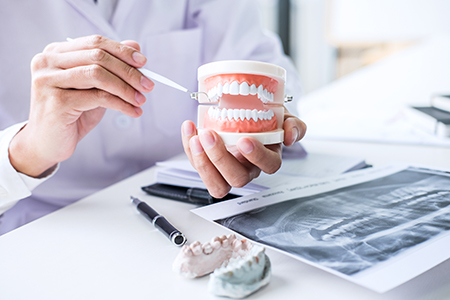
Creating a well-fitting denture involves both clinical assessment and laboratory craftsmanship. We begin with a detailed oral exam, digital or traditional impressions, and any necessary imaging to evaluate bone and tissue anatomy. These diagnostics guide design choices that affect comfort, function, and aesthetic.
Pre-prosthetic procedures—such as smoothing sharp bone edges, extracting non-restorable teeth, or placing implants—may be recommended to enhance the final fit and longevity of the denture. When implants are part of the plan, surgical placement is coordinated with restorative steps to achieve predictable outcomes.
The laboratory phase includes selecting tooth shapes and shades that match the patient’s facial characteristics and personality. Try-in appointments allow adjustments to tooth position and bite before the final processing so the finished denture supports natural speech and comfortable chewing.
We emphasize communication throughout this process so patients know what to expect at each appointment and are confident in the look and feel of their new prosthesis.

Adjusting to a new denture is a gradual process. In the first days or weeks you may notice increased saliva or a brief period of altered speech and chewing. These changes are common and typically resolve as muscles and tissues adapt to the appliance. Practicing talking and starting with soft foods can speed that adjustment.
Proper care keeps a denture looking and functioning well. Rinse the appliance after meals, brush it daily with a denture brush and approved cleaner, and soak it overnight in water or a recommended solution. Also continue to brush any remaining natural teeth and gums to maintain tissue health.
Over time, the shape of your mouth may change, which can affect denture fit. Routine follow-up visits allow us to examine tissue health, check the condition of the denture, and recommend relines or adjustments when needed. In many cases, implant attachments or adhesives can be used to enhance stability if movement becomes an issue.
Regular dental exams remain important after receiving dentures so we can monitor oral health, screen for changes, and keep your prosthesis performing well for years to come.
In summary, dentures remain a versatile and effective solution for restoring smiles and oral function. With careful planning, quality fabrication, and attentive follow-up, patients can enjoy improved comfort and confidence. If you’d like to learn more about denture options or discuss a personalized treatment plan, please contact us for more information.


Dentures are removable prosthetic appliances that replace missing teeth and the surrounding gum tissue. A contoured base sits on the gums and supports artificial teeth that are matched for color, shape, and size to create a natural appearance. Modern denture materials are designed to resist staining and mimic the translucency of natural enamel for a lifelike result.
Removable dentures allow patients to take the appliance out for cleaning, which helps maintain oral hygiene and lets clinicians monitor tissue health. Full dentures replace an entire arch while partial dentures fill gaps when some natural teeth remain. Implant-retained options can combine the accessibility of a removable prosthesis with improved stability and chewing function.
Common denture styles include complete (full) dentures that restore an entire upper or lower arch and removable partial dentures that fit around remaining natural teeth. Immediate dentures are placed at the time of extraction to avoid a toothless period, whereas healed-fit dentures are fabricated after tissues have healed for a more stable fit. Overdentures and implant-supported dentures use existing roots or titanium implants to enhance retention and preserve jawbone.
Frameworks and materials vary from traditional cast-metal partials to flexible resin and modern hybrid options that balance strength and aesthetics. The choice of style depends on the condition of remaining teeth, gum health, bone volume, and the patient’s functional and cosmetic goals. A clinical exam and discussion of expectations guide the selection of the most appropriate prosthesis.
Candidacy for dentures depends on several factors, including the number and condition of missing teeth, the health of remaining teeth and gums, and the amount of available jawbone. General health, oral hygiene habits, and personal preferences also influence which denture option is most appropriate. Patients with uncontrolled periodontal disease or untreated oral conditions typically require additional care before receiving a prosthesis.
An in-person consultation includes a detailed oral exam, imaging as needed, and a review of medical history to determine readiness for dentures. During this visit the team will explain all suitable options—removable, overdenture, or implant-supported solutions—and recommend any pre-prosthetic procedures that improve long-term outcomes. The goal is to match prosthetic design to function, comfort, and the patient’s lifestyle.
Fitting dentures begins with impressions and records that capture the shape of the gums and bite relationship, followed by laboratory fabrication that creates teeth and a contoured base. Try-in appointments allow clinicians and patients to evaluate tooth position, occlusion, and aesthetics before the final processing. When implants are part of the plan, surgical placement and restorative steps are coordinated to achieve predictable retention and fit.
After delivery, follow-up visits are important to adjust pressure points, refine the bite, and address sore spots that occur as tissues adapt. Over time relines or minor repairs may be necessary as the shape of the mouth changes. Prompt communication with the dental team helps resolve fit or function concerns and extends the service life of the appliance.
Immediate dentures are inserted at the same appointment as extractions so patients avoid a period without teeth, providing immediate aesthetic and functional benefits. Because tissues remodel after extractions, immediate dentures often require follow-up adjustments or relines to maintain proper fit as healing progresses. These appliances are a valuable transitional solution for patients who prioritize continuous appearance during recovery.
Healed-fit dentures are fabricated after the gums and bone have sufficiently healed, which generally produces a more predictable and stable fit from the outset. Although the process requires an interval without a permanent prosthesis or the use of a temporary appliance, healed-fit dentures typically need fewer early adjustments. Your clinician will discuss the advantages of each approach and recommend the best timing based on your oral health and treatment goals.
Yes. Implant-supported dentures attach to titanium posts placed in the jaw and provide significantly improved retention compared with conventional removable prostheses. These anchors stabilize the appliance, reduce slippage, and increase chewing efficiency so patients can eat a wider variety of foods with more confidence. Implant-retained options also transmit functional forces to the bone, which helps preserve jawbone volume over time.
Not every patient is an immediate candidate for implants; adequate bone volume and good overall health are important considerations. When implants are indicated, the treatment plan coordinates surgical placement with restorative steps to optimize outcomes. Implant-supported dentures can be designed as removable overdentures or fixed hybrid prostheses depending on patient needs and clinical findings.
Daily cleaning is essential to keep dentures looking and functioning well. Rinse the appliance after meals, brush it gently with a denture brush and an approved cleaner, and soak it overnight in water or a dentist-recommended solution to prevent warping and remove deposits. Avoid using abrasive toothpaste or hot water, which can damage the denture surface.
Maintain oral hygiene for any remaining natural teeth and gums by brushing and flossing regularly, and gently clean the tissues beneath the denture to reduce irritation and microbial buildup. Store dentures in water or a soaking solution when not in use and bring them to dental appointments for professional inspection and cleaning. Regular care helps prevent odors, staining, and fit-related problems.
Adaptation varies by individual but most patients experience the greatest changes during the first few days to weeks. Common early issues include increased salivation, temporary changes in speech, and difficulty chewing certain foods as muscles and tissues learn to accommodate the appliance. Practicing reading aloud, starting with soft foods, and gradually reintroducing firmer textures can accelerate the adjustment process.
If persistent discomfort, sore spots, or pronounced speech difficulties occur beyond the adaptation period, an adjustment or reline can usually resolve the issue. Regular follow-up visits allow the dental team to fine-tune fit and function so the prosthesis becomes comfortable and reliable. Communication with your clinician ensures that adaptation proceeds smoothly and that any problems are addressed promptly.
Patients should expect routine dental visits to evaluate tissue health, check the condition of the denture, and perform any necessary relines or repairs. Over time the gums and supporting bone can change shape, which may lead to looseness or uneven pressure on tissues; relines and adjustments help restore optimal fit. Implant-retained appliances require periodic assessment of attachment components and hygiene around implant sites.
Annual or semiannual examinations typically include oral cancer screening, assessment of any remaining teeth, and guidance on denture care. Prompt attention to cracks, chips, or persistent discomfort prevents more complex problems and helps maintain comfort and function. Keeping scheduled follow-ups supports long-term success with your prosthesis.
Restoration Dental begins each denture case with a thorough consultation to understand the patient’s goals, medical history, and daily needs, then uses detailed impressions and diagnostic records to guide design. The practice collaborates closely with skilled dental laboratories to select tooth shape, shade, and base contours that complement facial features and speech. Try-in appointments and clear communication allow for adjustments to bite, aesthetics, and comfort before final processing.
When appropriate, our team recommends advanced options such as implant attachments or overdentures to enhance stability and preserve bone. We also offer sedation options for patients who prefer added comfort during procedures, and we emphasize timely follow-up care to refine fit as tissues adapt. This patient-centered approach prioritizes predictable outcomes, function, and a natural appearance.

Ready to schedule your next appointment or learn more about our services?
Getting in touch with Restoration Dental is simple! Our welcoming staff is here to help you schedule appointments, answer questions about treatments, and address any concerns you may have. Whether you’d like to call or use our easy online contact form, we’re always ready to assist. Don’t wait to take the first step toward a healthier, more confident smile – contact us today and experience the difference of personalized dental care.